A solar water heater uses the sun to heat water directly, with no panels or batteries. It's one of the most cost-effective ways to cut an electricity bill, because electric showers and geysers are among the biggest loads in a Kenyan home. Choose evacuated tubes or flat plates, pressurised or non-pressurised, and size the tank to your household's daily hot-water use.
Look at the power rating on an electric shower and you'll see why hot water is so expensive in Kenya: many are rated in the thousands of watts, several times more than a fridge, TV and all your lights combined. Instant heaters and electric geysers are similar. That's why a solar water heater is often the single best-value energy upgrade a home, hotel, school or hostel can make.
This guide explains how solar water heaters work, the main types, how to size one, and what to look for in a quote.
How a solar water heater works
Unlike solar PV panels, which make electricity, a solar water heater captures the sun's heat directly. It has two main parts:
- A collector on the roof that absorbs sunlight and transfers the heat to water or a heat-transfer fluid
- An insulated storage tank that keeps the heated water hot for evening and morning use
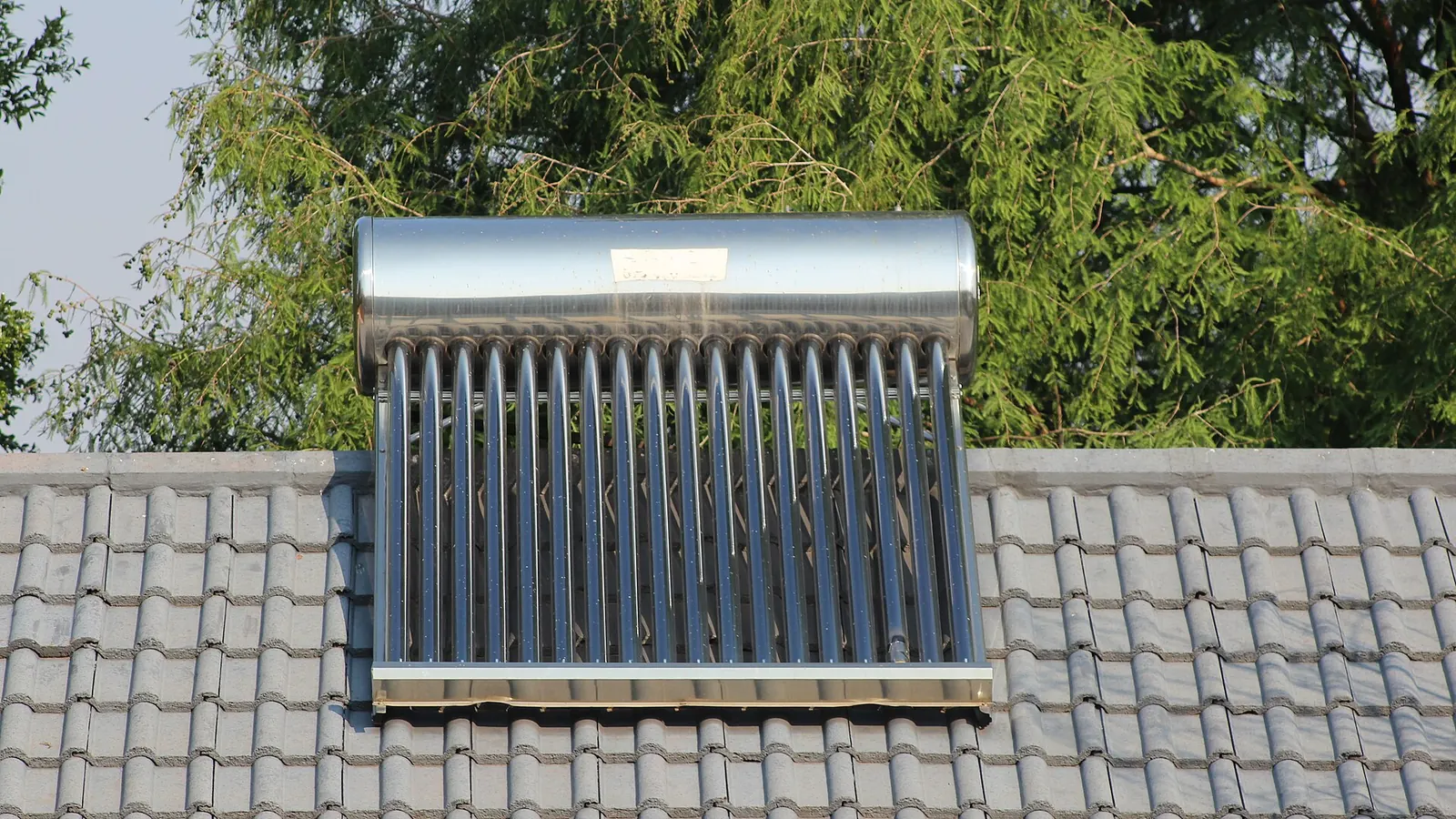
In the most common Kenyan setup, a thermosiphon system, hot water naturally rises from the collector into a tank mounted just above it, with no pump needed. Pumped systems, with the tank placed elsewhere, are used in larger or more complex buildings.
Evacuated tube vs flat plate collectors
| Evacuated tube | Flat plate | |
|---|---|---|
| How it looks | Rows of glass tubes | A flat, glass-covered panel |
| Performance | Strong in cooler and cloudier conditions; vacuum insulation reduces heat loss | Very effective in strong sun; robust and simple |
| Durability | Individual tubes can be replaced if broken | Sturdy, but a damaged panel is replaced as a unit |
| Hard water | Direct-flow tube designs can be affected by scaling | Indirect (closed-loop) designs handle hard water well |
| Typical cost | Often lower for home sizes | Often higher, but long-lasting |
Both types work well in Kenya's sunny climate. The better choice depends on your water quality, budget, roof and whether you're at high altitude with cooler mornings.
Pressurised vs non-pressurised systems
Non-pressurised (gravity) systems
These work with low water pressure and are fed from a roof tank. They're simple, affordable and common in Kenyan homes. The trade-off is lower pressure at the shower, especially on the same floor as the tank.
Pressurised systems
These work at mains pressure (or with a booster pump) and deliver strong, even flow to multiple bathrooms, just like a conventional geyser. They cost more and need adequate supply pressure, pressure-rated tanks and safety valves.
Tip: if your home already has low water pressure, a non-pressurised system fed by a well-positioned roof tank is often more practical than fighting pressure problems with a pressurised system.
How to size a solar water heater
Size is measured by tank capacity in litres. A common starting point is around 40–60 litres of hot water per person per day, adjusted for your household's habits:
| Household | Typical tank size |
|---|---|
| 1–2 people | 100–150 litres |
| 3–4 people | 150–200 litres |
| 5–6 people | 200–300 litres |
| Guesthouses, hostels, schools, hotels | Engineered to occupancy and peak demand |
These are planning ranges. Long showers, baths, washing machines on hot fill, and extra guests increase demand.
How much can you save?
Savings depend on how much electricity you currently use to heat water. The logic is straightforward: every kWh that your shower or geyser no longer draws from the grid is a unit you don't pay for. Households that rely heavily on electric showers or geysers typically see a noticeable fall in their bill once most of their hot water comes from the sun.
To estimate your own savings:
- Find the wattage of your electric shower or geyser (on its label).
- Estimate how many hours it runs per day across all users.
- Multiply watts × hours ÷ 1,000 to get daily kWh, then × 30 for the month.
- Multiply by your effective cost per kWh from your bill.
Illustrative example: a 4,500 W shower used for a combined 40 minutes a day consumes about 4.5 × 0.67 ≈ 3 kWh a day, or roughly 90 kWh a month. At an assumed KES 30 per kWh, that's about KES 2,700 a month just for showers, most of which a solar water heater can eliminate.
Solar water heating and the rules for new buildings
Kenya introduced solar water heating regulations in 2012 aimed at premises using more than 100 litres of hot water a day, such as larger homes, hotels, hospitals, schools and hostels. How these rules have been applied has been debated and has changed over time. If you're building or renovating, check the current requirements with EPRA, your county planning office or your architect before you finalise plans.
Solar water heater or solar PV for hot water?
If you're installing solar PV for your home, it's tempting to run your electric shower from it. In most cases, that's the expensive route. An electric shower's high wattage demands a large inverter and, for evening showers, a lot of battery capacity. A solar water heater does the same job far more efficiently. Many of the best-value home energy setups combine:
- A solar water heater for hot water
- A hybrid PV system for lights, appliances and blackout backup
- Gas for cooking
Installation and maintenance tips
- Roof strength: a full tank is heavy. Your installer should confirm the roof can carry it or use an appropriate stand.
- Orientation and shading: collectors need clear sun for most of the day.
- Short, insulated pipes between tank and bathrooms reduce heat loss and waiting time.
- Backup element on a timer or thermostat, so it only runs when truly needed, not all day.
- Hard water: descale periodically and check the sacrificial anode where fitted.
- Safety valves: pressure and temperature relief valves on pressurised systems must be fitted and working.
Common problems and how to avoid them
Most solar water heater complaints come down to a few preventable issues:
- "The water is only warm." Usually undersizing (too small a tank for the household), shading on the collector, or long uninsulated pipes losing heat. Sizing and installation fix this, not a bigger backup element.
- "It works in the afternoon but not in the morning." Heat is lost overnight from poorly insulated tanks, or hot water is used up by evening. A larger tank, better insulation, or a timer on the backup element for early mornings helps.
- Leaks and dripping valves. Pressure relief valves release water by design when pressure or temperature is high. Persistent dripping may mean the supply pressure is too high or a valve needs replacing.
- Scaling from hard water. Mineral deposits reduce efficiency and can block direct-flow systems. Indirect systems, periodic descaling and water treatment prevent this.
- The electric backup running all day. A backup element without a timer or thermostat can quietly erase your savings. Make sure it only runs when needed.
- Broken tubes or glass. Hail, falling branches or careless roof work can damage collectors. Replaceable tubes and a quality installation limit the impact.
A good installer will size the system properly, keep pipe runs short and insulated, set up the backup element sensibly, and show you how to spot early warning signs.
The bottom line
If your home or business uses electric showers or a geyser, a correctly sized solar water heater is one of the quickest ways to bring your electricity bill down, often more cost-effectively than adding PV panels. Choose the collector type for your water quality and climate, choose pressurised or non-pressurised based on your water supply, and size the tank to how your household actually uses hot water.
Frequently asked questions
How many litres of solar water heater do I need?
A common rule of thumb is roughly 40 to 60 litres of hot water per person per day, depending on habits. A family of four often chooses a tank in the 150 to 200 litre range. An installer will confirm this based on your showers, kitchen use and water pressure.
Does a solar water heater work on cloudy days?
It still collects some heat on cloudy days, but less. Most systems include an electric backup element, ideally on a timer or thermostat, for long cloudy spells.
Can a solar water heater work with low water pressure?
Yes. Non-pressurised (gravity) systems work with a roof tank and low pressure. Pressurised systems need adequate mains pressure or a pump but give stronger showers.
Is a solar water heater better than solar panels for heating water?
Usually, yes. A solar water heater converts sunlight directly into heat very efficiently. Running an electric shower from solar panels requires a large, expensive PV and battery system.
How long do solar water heaters last?
Good-quality systems commonly last many years with basic maintenance. Hard water can cause scaling, so descaling and checking the anode and valves periodically extends their life.
Can I install a solar water heater on an iron-sheet roof?
Yes, with the correct mounting and support. A full tank is heavy, so the installer must confirm the roof structure can carry it, or use a separate stand.
BrightSun Solar designs and installs solar power, battery backup, solar water pumping and solar water heating for homes, businesses, farms and institutions in Nairobi and across Kenya. Installations are carried out by EPRA-licensed technicians. Why customers choose us.
Get a solar water heater sized for your household
Tell us about your property in 60 seconds. We'll reply on WhatsApp with next steps and book a free site survey.