Choose grid-tied if you mainly want lower daytime bills and can live without power during outages. Choose hybrid, which suits most Kenyan homes and businesses, if you want lower bills and automatic backup during KPLC blackouts. Choose off-grid if there is no grid connection, or connecting would cost more than going fully solar.
When you ask for a solar quote, the first question a good installer asks is not "how many panels?" It's "what do you want solar to do for you?" The answer determines which of the three main system types you need: grid-tied, hybrid or off-grid. It also affects your cost, backup and savings more than any other choice.
This guide explains each type in plain language, compares them side by side, and helps you decide which one fits your home, farm or business in Kenya.
The three system types in one minute
- Grid-tied: solar panels and a grid-tied inverter work alongside KPLC. Solar powers your property during the day and the grid fills any gap. No batteries.
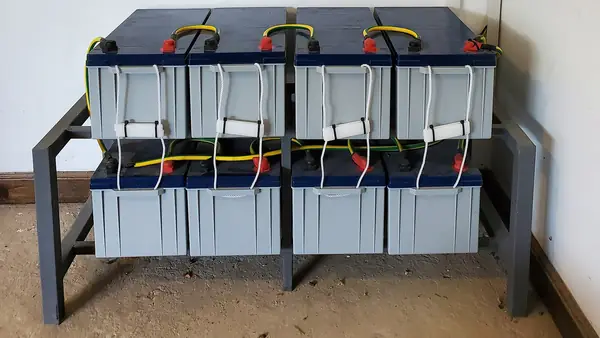
- Hybrid: solar panels, batteries and a hybrid inverter, still connected to KPLC. Solar powers the property and charges the batteries; the batteries take over in the evening or during blackouts; the grid is the fallback.
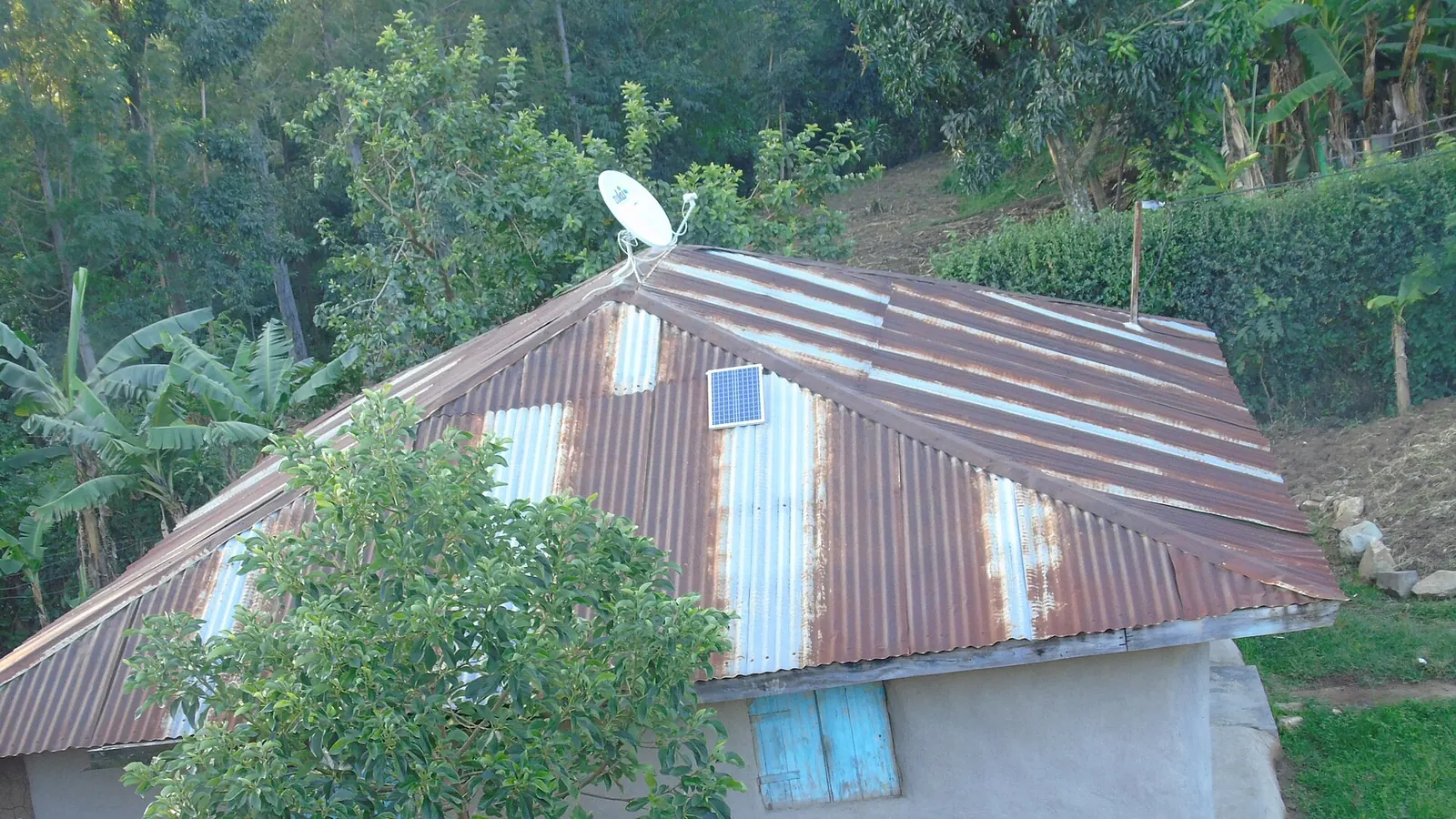
- Off-grid: solar panels, batteries and an off-grid inverter with no KPLC connection at all. Everything you use must come from the sun and your batteries.
Grid-tied solar: lowest cost, no blackout protection
A grid-tied system is the simplest and usually the cheapest way to cut your electricity bill. During daylight, your panels supply your loads, and you buy less power from KPLC. At night, you draw from the grid as usual.
The important catch in Kenya: a grid-tied system switches off during a power outage. This "anti-islanding" feature is a safety requirement. It stops your system from sending power into lines that technicians may be repairing. So if the grid goes down at 2 pm on a sunny day, your panels stop supplying your home too.
Grid-tied suits you if…
- Most of your electricity is used during daylight: offices, shops, schools, workshops, cold rooms running in the daytime.
- Outages in your area are rare or short, or you already have a generator or UPS for critical equipment.
- Your main goal is reducing the bill, not backup.
Hybrid solar: the best fit for most Kenyan properties
A hybrid system does what most people imagine solar does: it cuts your bill and keeps the lights on when the grid fails. The hybrid inverter manages three sources, solar, battery and grid, and switches between them automatically, often so quickly that lights, TVs and Wi-Fi routers don't even flicker.
A typical day for a hybrid home looks like this:
- Morning to afternoon: panels power the home and charge the batteries.
- Evening: batteries supply lights, TV, fridge and Wi-Fi, reducing expensive evening grid use.
- Blackout: the inverter isolates your home from the grid and runs everything that is connected to the backup circuit from solar and battery.
- Long cloudy spell: the grid tops up your batteries so you're never stranded.
Hybrid suits you if…
- You experience outages and want automatic backup without generator noise or fuel.
- You use significant power in the evening.
- You run a business where downtime means lost sales, spoiled stock or idle staff.
- You want the flexibility to add more batteries or panels as your needs grow.
The trade-off is cost: batteries add significantly to the price. The key to an affordable hybrid system is backing up only what matters. Lights, sockets, fridge, TV, Wi-Fi and security systems are usually enough. Keeping electric showers, cookers and ovens off the backup circuit can shrink the battery and inverter dramatically.
Off-grid solar: complete independence
An off-grid system has no connection to KPLC. Every unit of energy you use must be generated by your panels and stored in your batteries. This makes the design much more demanding: the system has to cope with your highest-demand days and with several cloudy days in a row.
Off-grid suits you if…
- Your property is far from the grid, or the cost of connecting is high.
- You are building on a farm, ranch, rural home, lodge or remote site.
- You want full independence and accept the higher upfront investment.
Off-grid systems usually need more panels and more battery storage than a hybrid system for the same household, and many include a generator input for extended bad weather. Energy discipline also matters more: an off-grid home typically uses gas for cooking and solar for water heating.
Side-by-side comparison
| Grid-tied | Hybrid | Off-grid | |
|---|---|---|---|
| Connected to KPLC | Yes | Yes | No |
| Batteries | No | Yes | Yes (larger) |
| Works in a blackout | No | Yes | Yes |
| Reduces your bill | Daytime use | Day and evening | No bill |
| Upfront cost | Lowest | Medium | Highest |
| Design complexity | Low | Medium | High |
| Best for | Daytime businesses | Most homes & businesses | Remote & rural sites |
How to decide: five questions
- Do you have a KPLC connection? If not, and connecting is expensive or slow, off-grid is your answer.
- How often do outages affect you, and what do they cost you? Frequent outages, or high costs when they happen, point to hybrid.
- When do you use most of your power? Mostly daytime? Grid-tied may be enough. Evenings? Hybrid will save more.
- What must keep running during a blackout? List the essentials. This defines your battery size.
- What is your budget today, and will your needs grow? A battery-ready inverter lets you start smaller and expand.
Common mistakes to avoid
- Buying grid-tied and expecting blackout backup. It's the most common misunderstanding. Ask your installer directly: "Will my system run during an outage?"
- Backing up everything. Putting heavy loads like electric showers on the battery circuit makes a hybrid system far more expensive than it needs to be.
- Undersizing an off-grid system for the rainy season, then running out of power in April.
- Choosing an inverter with no room to grow. If you might add batteries or panels, plan for it now.
Real-world scenarios: which system fits?
Here's how the decision usually plays out for common Kenyan properties. These are typical recommendations, not rules; your bills and site decide the final design.
A family home in a suburb with regular outages
Both parents work, the children are at school, and the house is busiest in the evening. Outages happen every few weeks and sometimes last hours. Recommendation: hybrid. Solar charges the batteries while the house is empty; the batteries run lights, TV, fridge and Wi-Fi in the evening and through blackouts. Water heating moves to a solar water heater.
A busy office or shop open 8 am to 6 pm
Computers, lighting, air conditioning and fridges run all day, and the premises are closed at night. There's already a small generator for emergencies. Recommendation: grid-tied, possibly with a small battery for tills, servers and security. Daytime use soaks up almost all the solar output, giving a fast payback.
A rural homestead 3 km from the nearest power line
Connecting to the grid would be slow and expensive. The family needs lights, phone charging, a TV, a fridge and a borehole pump. Recommendation: off-grid, with gas for cooking, a solar water pump filling an elevated tank, and battery storage sized for cloudy spells.
A clinic or pharmacy with vaccines and cold stock
Power interruptions put medicines at risk. Recommendation: hybrid with priority on critical loads: refrigeration, lighting and computers on a protected circuit with enough battery capacity to ride out long outages.
The bottom line
For most Kenyan homes and businesses dealing with outages, a hybrid solar system is the most practical choice. It lowers bills and gives automatic backup. Grid-tied makes sense for daytime-heavy users focused on savings, and off-grid is the right answer when the grid simply isn't there.
The best way to decide is to look at your actual bills and loads with an installer, who can show you what each option would cost and deliver for your property.
Frequently asked questions
Does a grid-tied solar system work during a power outage?
No. A grid-tied inverter shuts down when the grid fails. This protects KPLC technicians working on the lines. If you want power during blackouts you need a hybrid or off-grid system with batteries.
Can I upgrade a grid-tied system to hybrid later?
Sometimes. If your existing inverter cannot manage batteries, you would add a battery-ready inverter or a separate battery inverter. Planning for batteries from the start is usually cheaper.
Is a hybrid system the same as an inverter with batteries?
Not quite. A backup inverter with batteries charges from the grid and has no solar. A hybrid system charges batteries from solar panels, powers your home from the sun during the day, and uses the grid as a backup.
How many hours of backup will a hybrid system give me?
It depends on the battery capacity and what you run during the outage. A system backing up lights, a fridge, TV and Wi-Fi will last far longer than one running an electric shower or cooker. Your installer should calculate this for your actual loads.
Is off-grid solar reliable during the rainy season?
It can be, if it is designed for it. Off-grid systems need extra panel capacity and battery storage for cloudy days, and sometimes a small generator as a last-resort backup.
Which solar system is best for Kenyan homes?
For most homes connected to KPLC that experience outages, a hybrid system gives the best balance. It lowers the bill and provides automatic backup. Grid-tied suits homes focused only on daytime savings, and off-grid suits properties without a grid connection.
BrightSun Solar designs and installs solar power, battery backup, solar water pumping and solar water heating for homes, businesses, farms and institutions in Nairobi and across Kenya. Installations are carried out by EPRA-licensed technicians. Why customers choose us.
Not sure which system fits? Let us size it for you
Tell us about your property in 60 seconds. We'll reply on WhatsApp with next steps and book a free site survey.