For most new solar systems in Kenya, lithium iron phosphate (LiFePO4) batteries are the better long-term value. They last many more charge cycles, let you use more of their capacity, need no maintenance and charge faster. Lead-acid batteries cost less upfront and can suit small or occasional-use systems, but they wear out much sooner when cycled daily.
If your solar system has batteries, they are likely the most expensive component you'll buy, and the one most likely to need replacing. So the choice between lithium and lead-acid solar batteries has a big effect on both your upfront cost and what you'll spend over the next ten years.
This guide compares the two chemistries honestly, explains the numbers that matter in a battery quote, and helps you decide which is right for your home or business in Kenya.
The two main battery types
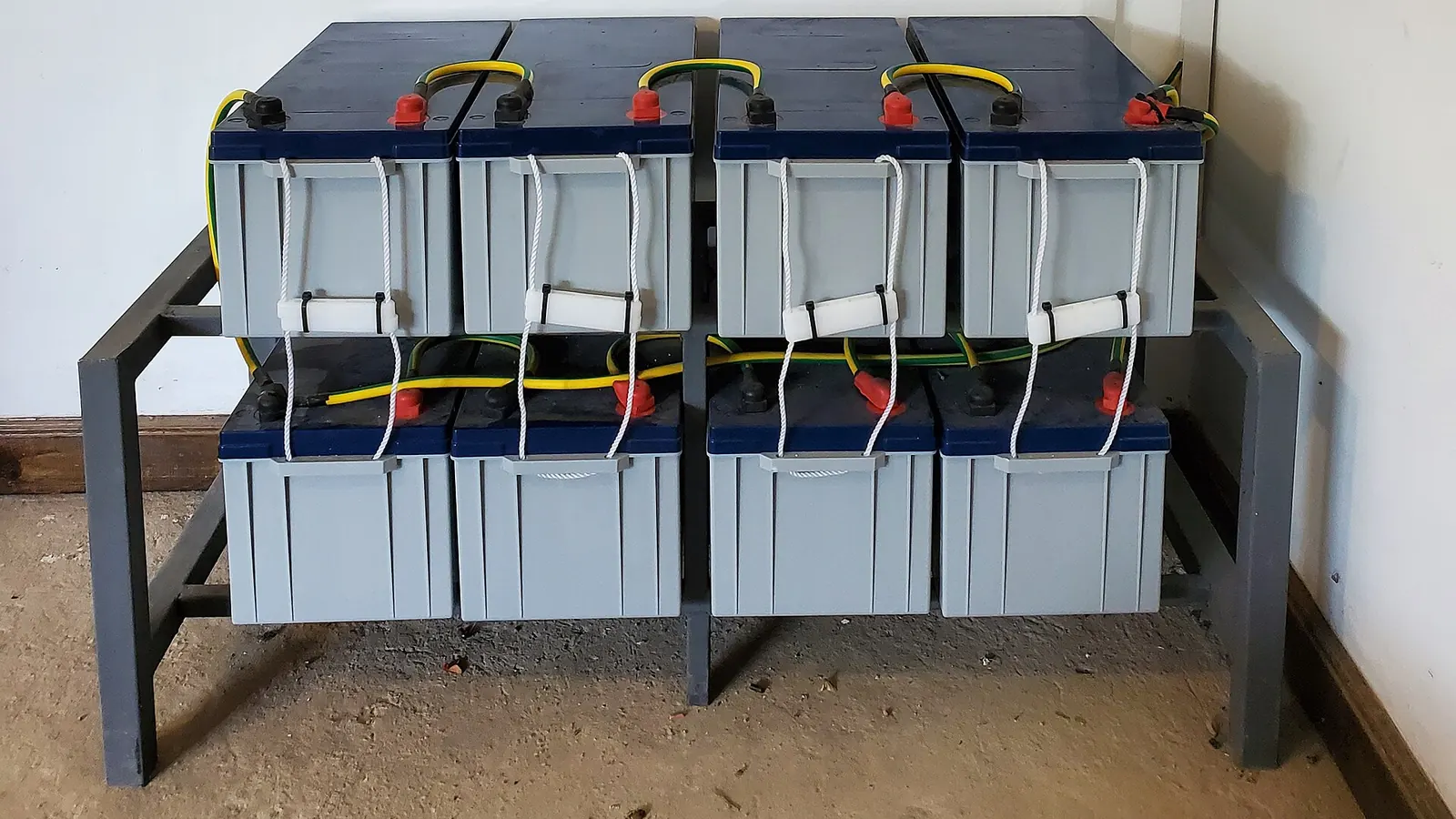
Lead-acid batteries
The traditional choice for solar and backup systems. They come in several forms:
- Flooded (wet) lead-acid: the cheapest, but they need regular topping up with distilled water and must be kept in a ventilated space.
- AGM (absorbed glass mat): sealed and maintenance-free, more expensive than flooded.
- Gel: sealed, more tolerant of deep discharge and heat than AGM, at a higher price.
- Tubular: heavy-duty flooded batteries designed for deep cycling, common in Kenyan backup systems.
Lithium batteries (LiFePO4)
For solar storage, the dominant lithium chemistry is lithium iron phosphate (LiFePO4 or LFP). It is known for long cycle life and good thermal stability, and it's different from the lithium chemistries used in many phones and laptops. These batteries come with a built-in battery management system (BMS) that protects the cells from overcharging, over-discharging and overheating.
Side-by-side comparison
| Lead-acid | Lithium (LiFePO4) | |
|---|---|---|
| Upfront cost | Lower | Higher |
| Usable capacity | Typically ~50% of rated capacity to protect lifespan | Typically 80–100% of rated capacity |
| Cycle life | Hundreds to low thousands of cycles, depending on type and depth of discharge | Commonly several thousand cycles |
| Maintenance | Flooded types need water top-ups and terminal cleaning | Essentially none |
| Charging speed | Slower, with a long absorption phase | Faster, accepts high charge current |
| Weight & space | Heavy and bulky | Much lighter and more compact for the same usable energy |
| Heat tolerance | Lifespan drops noticeably in hot rooms | Better, but still best kept cool and shaded |
| Monitoring | Basic voltage readings | BMS with detailed state of charge; often app-connected |
Figures are typical; always check the specific manufacturer's datasheet and warranty.
The number that matters most: cost per usable kWh over the battery's life
Comparing battery prices directly is misleading. A 200 Ah, 12 V lead-acid battery and a 200 Ah, 12 V lithium battery don't deliver the same useful energy, and they don't last the same time. A fairer comparison is:
Lifetime cost per kWh = battery price ÷ (usable kWh per cycle × number of cycles)
An illustrative example, using made-up round numbers to show the logic:
Battery A (lead-acid) has 2.4 kWh rated capacity, 50% usable (1.2 kWh per cycle), and lasts about 800 cycles: 1.2 × 800 = 960 kWh delivered over its life. Battery B (lithium) has 2.4 kWh rated, 90% usable (≈2.2 kWh per cycle), and lasts about 4,000 cycles: 2.2 × 4,000 ≈ 8,640 kWh delivered. Even if Battery B costs three times as much upfront, it delivers roughly nine times the energy, making it far cheaper per kWh.
That's why lithium usually wins for systems that cycle every day, such as hybrid homes and off-grid properties. For a system that only runs during occasional outages, the gap narrows and lead-acid can still make sense.
When lead-acid still makes sense
- Tight upfront budget for a small system, with a plan to upgrade later.
- Occasional backup only: the battery sits fully charged most of the time and only cycles during infrequent outages.
- Existing lead-acid system where the inverter doesn't support lithium and replacing it isn't in the budget yet.
If you choose lead-acid, choose deep-cycle solar batteries (tubular, gel or quality AGM), keep them in a cool, ventilated place, avoid deep discharges, and maintain them on schedule.
When lithium is the clear choice
- Daily cycling: hybrid systems that shift solar energy into the evening, and all off-grid systems.
- Frequent or long outages, where you need to use most of the stored energy.
- Limited space or upper-floor installations where weight matters.
- No time for maintenance: busy households, businesses and remote sites.
- Future expansion: many lithium systems let you add modules later.
How to read a battery quote
Before you pay, make sure the quote tells you:
- Chemistry (LiFePO4, tubular, gel, AGM or flooded)
- Voltage and capacity (e.g. 48 V, 100 Ah = 4.8 kWh rated)
- Usable capacity in kWh at the recommended depth of discharge
- Rated cycle life and at what depth of discharge
- Warranty: years, cycles or energy throughput, and who honours it locally
- Inverter compatibility, and whether the BMS communicates with the inverter
- Brand and model, so you can check the datasheet yourself
Battery care tips for Kenyan conditions
- Keep batteries cool. Heat is the enemy of every battery chemistry. Avoid hot roofs, tin sheds and direct sun.
- Ventilate lead-acid batteries, which can release gas while charging.
- Protect from dust and moisture, especially in workshops and farms.
- Don't mix batteries of different ages, capacities or types.
- Use the monitoring. Check state of charge and alerts, especially after long outages.
- Beware of counterfeit or refurbished cells sold as new. Buy from installers who can show a genuine warranty.
Battery voltage: 12 V, 24 V or 48 V?
Battery banks are built at a system voltage that must match your inverter. As a rule of thumb:
- 12 V suits very small systems: a few lights, phone charging and a TV.
- 24 V suits small to medium homes.
- 48 V is standard for most modern home and commercial hybrid systems.
Higher voltage means lower current for the same power, which means thinner cables, less heat, lower losses and better efficiency. Most modern lithium batteries for home systems are 48 V units designed to communicate with hybrid inverters. If you're upgrading from an old 12 V or 24 V backup system, a move to 48 V often comes with a new inverter.
Understanding battery warranties
Battery warranties are more complicated than they look. Read the small print for:
- Years and cycles or energy throughput. Many lithium warranties end at a number of years or a total amount of energy delivered, whichever comes first.
- End-of-warranty capacity. Some warranties guarantee the battery will retain a percentage of its original capacity, not that it will be as good as new.
- Conditions. Warranties may require installation by an approved installer, operation within temperature limits, and a compatible inverter.
- Local support. A warranty is only as good as the company that honours it. Ask who in Kenya processes claims, and how long replacements take.
Upgrading from lead-acid to lithium
Many Kenyan homes already have a lead-acid backup system and are wondering whether to switch. A few practical points:
- Check the inverter first. Older inverters may lack a lithium charging profile or battery communication. Running lithium on an incompatible inverter can shorten its life or void the warranty.
- Replace the whole bank, not part of it. Lithium and lead-acid should never be mixed in the same bank.
- Recycle old batteries responsibly. Lead-acid batteries contain lead and acid; ask your installer how they dispose of them.
- Review your system size at the same time. Because lithium delivers more usable energy, you may need less rated capacity than you had before.
The bottom line
Lead-acid batteries cost less today; lithium batteries usually cost less over the life of your system. If your batteries will be cycled every day, lithium (LiFePO4) is almost always the better investment. If they'll mostly sit on standby for occasional outages, a good deep-cycle lead-acid bank can still be a sensible, budget-friendly choice.
Either way, the right battery depends on how you'll use it. Size it to your actual evening and outage needs, and make sure it's compatible with your inverter.
Frequently asked questions
How long do lithium solar batteries last in Kenya?
Quality LiFePO4 batteries are commonly rated for several thousand charge cycles, often around 10 years of daily use or more depending on depth of discharge, temperature and the battery management system. Check the manufacturer's cycle rating and warranty.
How long do lead-acid solar batteries last?
It depends heavily on how deeply they are discharged and how well they are maintained. With daily deep cycling, many lead-acid batteries need replacing within a few years; with shallow cycling and good care they last longer.
Can I mix old and new batteries or different battery types?
It is not recommended. Mixing batteries of different ages, capacities or chemistries causes uneven charging and shortens the life of the whole bank.
Do lithium batteries work with any inverter?
No. The inverter must support lithium batteries and ideally communicate with the battery's management system (BMS). Confirm compatibility before buying.
Are car batteries OK for solar?
No. Car batteries are designed for short bursts of high current to start an engine, not for daily deep cycling. They fail quickly in solar systems.
What size battery do I need for my solar system?
Work out the energy your backed-up appliances use overnight or during a typical outage in watt-hours, then divide by the battery's usable depth of discharge. Add extra storage for off-grid systems to cover cloudy days.
Can I add more lithium batteries later?
Often yes, if the battery system is modular and your inverter supports the extra capacity. Ideally, add identical modules from the same manufacturer and check compatibility before you buy.
BrightSun Solar designs and installs solar power, battery backup, solar water pumping and solar water heating for homes, businesses, farms and institutions in Nairobi and across Kenya. Installations are carried out by EPRA-licensed technicians. Why customers choose us.
Get the right battery for your backup needs
Tell us about your property in 60 seconds. We'll reply on WhatsApp with next steps and book a free site survey.